
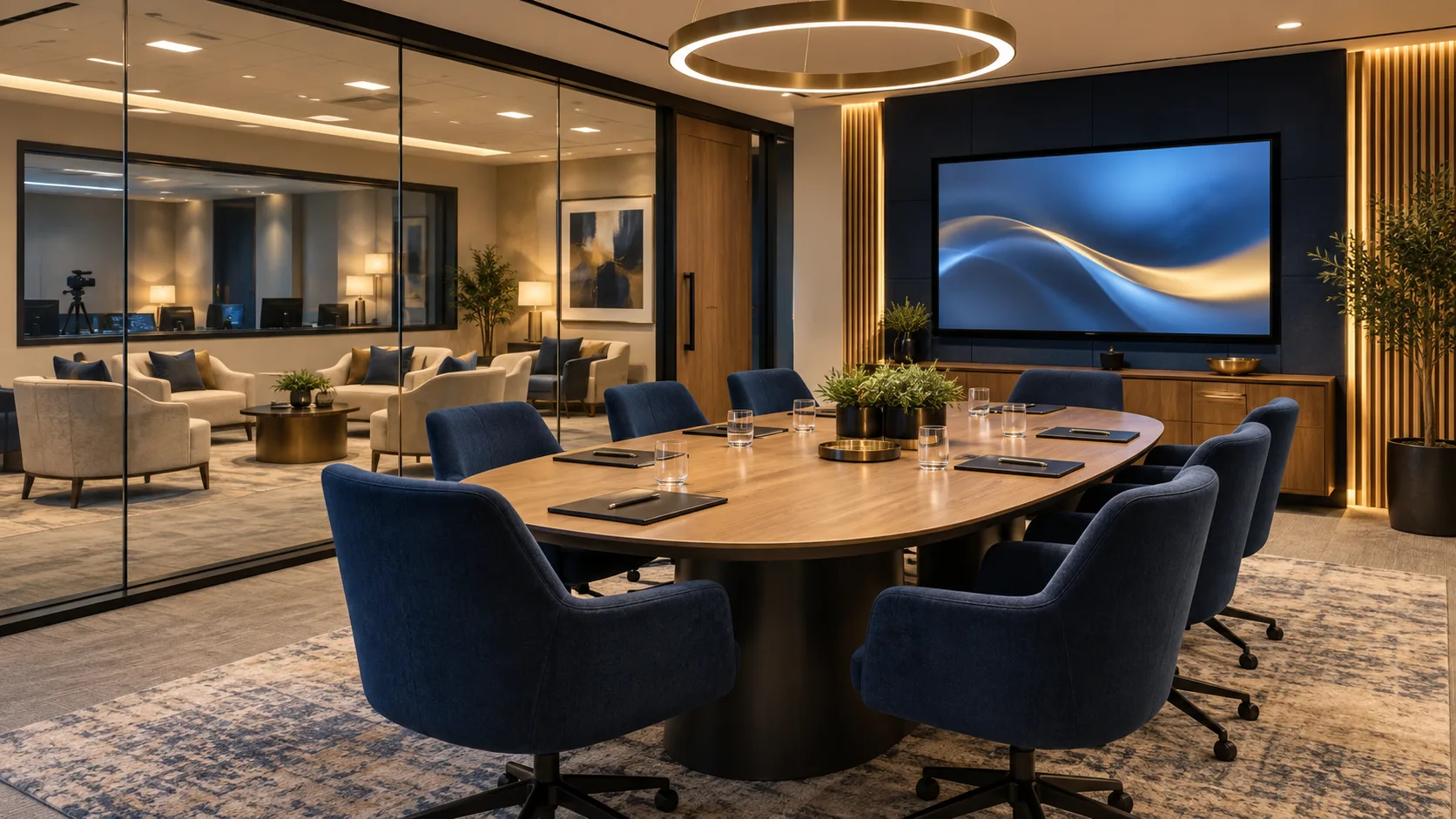
A market research facility is more than a room with a table and chairs. The environment can influence participant comfort, client observation, moderator performance, and the overall efficiency of a research day.
For focus groups, mock trials, interviews, usability sessions, and other in-person studies, choosing the right facility can make the difference between a smooth project and a day filled with avoidable distractions.
Start with the research objective
The right facility depends on what participants need to do.
A focus group may require a comfortable discussion room and client observation area. A mock trial may need more seating, larger display capability, and space for complex materials. A usability study may need strong internet, device support, recording capability, or one-on-one rooms.
Before selecting a facility, consider:
- Session format
- Number of participants
- Client team size
- Technology needs
- Recording needs
- Product or stimulus setup
- Catering
- Accessibility
- Parking or transportation
- Breakout space
The best facility is one that supports the research naturally.
Participant comfort matters
Participants are more likely to engage when the environment feels comfortable, professional, and easy to navigate.
A good participant-facing space should provide:
- Clear arrival instructions
- Comfortable seating
- Appropriate temperature and lighting
- Restroom access
- Water and basic refreshments when appropriate
- Enough space to avoid feeling crowded
- Privacy from unrelated office activity
Participants should be able to focus on the discussion rather than the environment.
The moderator needs a room that supports conversation
A research room should help the moderator maintain eye contact and manage the group.
Tables should not be so large that people feel disconnected. Seating should allow participants to see one another easily. Screens or stimulus materials should be visible without forcing people to turn awkwardly.
For less formal studies, lounge-style rooms can sometimes encourage more natural conversation.
The right setup depends on the research topic and audience.
Client observation should be easy
Research teams often need to observe without disrupting participants.
A strong facility may offer:
- One-way viewing
- Live video feeds
- Separate client rooms
- Headphones or audio monitoring
- Secure online streaming
- Comfortable work areas
- Power and charging access
- Reliable Wi-Fi
Clients should be able to discuss the session, take notes, and prepare follow-up questions without interfering with the research.
Technology should work quietly in the background
Technology is most successful when nobody has to think about it.
Useful capabilities may include:
- Reliable high-speed internet
- High-quality microphones
- Cameras
- Large displays
- Recording
- Streaming
- Video conferencing
- Screen sharing
- Backup connectivity
- Technical support
The facility should be able to test everything before participants arrive.
Location can affect show rates
A beautiful room is not useful if participants cannot reach it easily.
Research teams should consider:
- Proximity to the target audience
- Traffic patterns
- Parking
- Public transportation
- Building access
- Evening safety
- Clear signage
In large markets such as New York or Los Angeles, neighborhood selection can matter as much as the city itself. In Northern Virginia or Dallas, drive time and parking may be more important.
Accessibility should be part of planning
Facilities should consider participants with mobility, visual, hearing, or other accessibility needs.
Accessible entrances, elevators, restrooms, seating, and parking can affect whether participants are able to take part comfortably.
If the audience includes older adults or people with disabilities, accessibility should be discussed early rather than treated as a last-minute accommodation.
Flexible rooms add value
Research needs can change quickly. A room that can support a traditional table setup, lounge seating, individual stations, or breakout groups can be especially useful.
Flexible spaces can also help when a project includes multiple sessions in one day.
Privacy matters
Participants should not feel that their information or conversation is exposed.
Facilities should have clear processes for:
- Participant check-in
- Name handling
- Client access
- Recording
- Confidential materials
- Secure data transfer
For sensitive studies, privacy may influence the entire site selection.
Hospitality still matters
Professional research is demanding. Small details make long research days easier.
Useful amenities can include:
- Coffee and refreshments
- Catering coordination
- Break areas
- Charging stations
- Printing
- Supplies
- Staff support
These things do not replace strong recruiting or moderation, but they help the day run smoothly.
A good facility partner thinks ahead
The strongest facility teams do more than hand over a room key. They help anticipate logistics.
That can include confirming room setups, testing technology, coordinating participant arrival, helping with signage, supporting client needs, and responding quickly when plans change.
Final takeaway
A great market research facility supports participants, moderators, clients, and technology at the same time. It should feel comfortable, easy to access, well equipped, and professionally managed.
The best facility is not necessarily the largest or most expensive. It is the one that fits the study.
NewStar Research supports research in multiple markets and can help coordinate facility-based and partner-location research based on project needs.
Related pages: Facilities · Our Focus & Methodology · Client Bid Request